What Is The Rotator Cuff?

The rotator cuff consists of 4 tendons and muscles that unite around the shoulder joint.
These tendons and muscles keep the ball of your upper-arm bone in the shoulder socket
and are instrumental in the mobility of your shoulder and arm. When the rotator cuff is
injured or torn and becomes swollen, pain and lack of flexibility result. The physical
therapists at Elite Spine & Sports Care of Totowa can treat this type of injury and greatly
relieve your pain. Treatment is generally accomplished with the use of Deep Tissue Laser
Therapy. Our therapists can also educate you about ways to prevent future rotator cuff
injuries. Treatment for Rotator Cuff Injury in Passaic County NJ is always available at
Elite Spine & Sports Care of Totowa.
What Are Symptoms?
Symptoms of Rotator Cuff Injury may include weakness and pain in the shoulder, trouble
in lifting your arm above your head, creaking sounds when moving the shoulder. When
you experience any of these issues it is best to seek treatment quickly so the pain and
discomfort can be eased.
What Does Treatment Consist Of?
The Physical Therapists at Elite Spine & Sports Care of Totowa generally focus on Deep
Tissue Laser Therapy for treating Rotator Cuff injuries. Treatment strengthens the
scapular and arm muscles that surround the Rotator Cuff and Deep Tissue Laser Therapy
speeds up the recovery process by getting blood flowing. Our therapists also promote
exercises that prevent future Rotator Cuff injuries. Treatment for Rotator Cuff Injury
in Passaic County NJ is a specialty of ours, as this type of injury is common, especially
among physically active people.
Deep Tissue Laser Therapy For Rotator Cuff Injury Is Available in Passaic County
If you live in the Totowa area or anywhere in Passaic County NJ and have suffered an
injury to your Rotator Cuff, call Elite Spine & Sports Care of Totowa at (862) 239-1768.
We will analyze the injury and steer you toward the best treatment. Our Physical Therapy
and Deep Tissue Laser Therapy treatment services are available to relieve pain. We are
also available to teach you how to exercise for healing and to prevent future Rotator
Cuff injuries. Staying active is always essential for a healthy life.


Spring very often means yard work. This is when you prepare your garden for the growing
Taking care of yourself before having a baby and after helps make everything run smoothly. Physical Therapy and functional exercises make pregnancy more comfortable and recovery easier.
To start, TMJ stands for
After an injury or if chronic pain troubles you, a healing process should be put in place.
BPPV stands for Benign Paroxysmal Positional Vertigo and is a condition where you may have a sensation of spinning. This uncomfortable feeling of dizziness can be caused by an inner ear problem, or by changing your head’s position. Knowing the cause of BPPV is important in determining the type of treatment necessary. BPPV can be treated with Physical Therapy, Chiropractic care, or Acupuncture. Experienced therapists at
Physical Therapy and Rehabilitation are important for the success of your recovery after surgery. When your body has gone through a repair procedure you need to retrain it to be active again. This takes time and hard work. Everyone has a role in their own recovery after surgery. The physical therapy specialists at
Our physical therapists design a comprehensive rehabilitation protocol for post surgery patients. This protocol would be set up to focus on the area of the surgery. It would promote healing, reduce swelling and address pain. While the program of rehabilitation would adjut as you recuperate, it would also focus on joint mobility, flexibility and building strength. There’s hard work ahead, so initially the program would center on preparation. Of course, your determination plays a big role in recovery. Regaining strength and mobility is up to you and commitment to the program will make recovery much easier and quicker.
Spinal Stenosis is the narrowing of the spinal canal in your back, causing pressure on the spinal cord. Spinal Stenosis can occur in any area of the back, but the most common trouble is in the lower back, or lumbar area. This pressure results in pain and burning in the back and down into the legs. Spinal Stenosis can make it hard to walk, and hard to stand up straight. At 
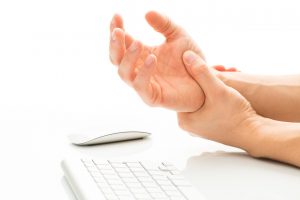
Carpal Tunnel Syndrome is a condition where the median nerve, which runs from the forearm to the palm of the hand, becomes painful with numbness and tingling. This is usually a result of being pressed or squeezed. The carpal tunnel is a path of ligament and bones at the base of the hand which houses the nerve and tendons that bend the fingers. Obviously a very important area of your anatomy that is in constant use. The continual use of the hand in the same way, such as typing or clicking on computer or phone buttons can cause pain and discomfort in the hand and arm and lead to Carpal Tunnel Syndrome. Tennis players are also susceptible to this condition from gripping a tennis racquet for long periods of time. Treating Carpal Tunnel Syndrome is a specialty of the physical therapists at